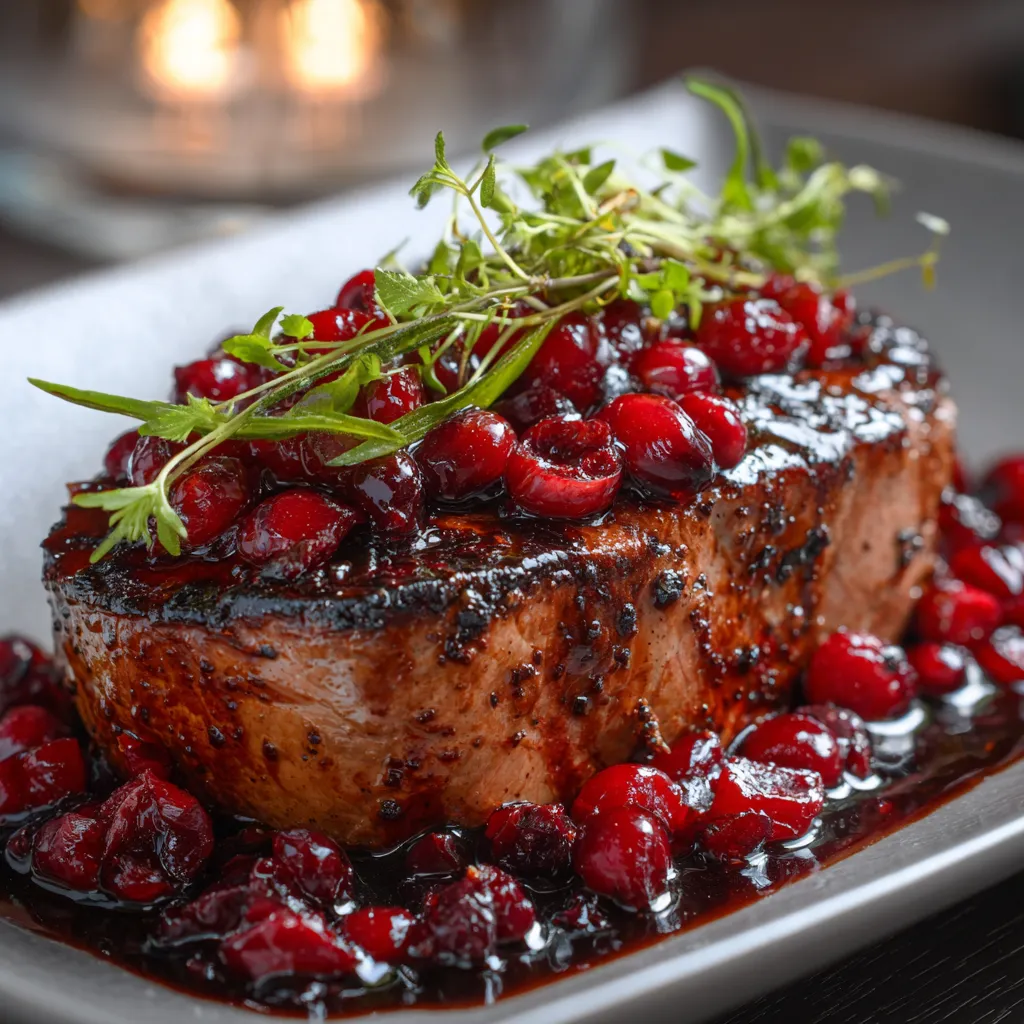
This Cranberry Glazed Beef Tenderloin is the ultimate recipe for any holiday gathering or special occasion. It’s a true showstopper that looks incredibly impressive on the table but is deceptively simple to prepare. Imagine a perfectly seared and roasted beef tenderloin, impossibly tender and juicy, coated in a glistening, ruby-red glaze that’s bursting with flavor. The glaze strikes a perfect balance between the tartness of cranberries, the deep sweetness of balsamic vinegar and brown sugar, and the savory notes of Dijon mustard, garlic, and herbs.
It creates a beautiful crust on the exterior of the roast while keeping the inside succulent and flavorful. Whether for Christmas dinner or a celebratory feast, this recipe guarantees a memorable main course that will have everyone asking for seconds. It’s elegance and comfort combined in one unforgettable dish.
Table of Contents
I first made this Cranberry Glazed Beef Tenderloin for a Christmas Eve dinner a few years ago. I wanted something that felt special and festive but wouldn’t keep me chained to the stove all day. A beef tenderloin roast always feels like a celebration, but I wanted to elevate it beyond a simple salt and pepper crust. I remembered a jar of whole berry cranberry sauce in the pantry and had a flash of inspiration.
I started experimenting, simmering the sauce with balsamic vinegar for depth, a touch of brown sugar for balance, and some Dijon mustard for a savory kick. The aroma from that little saucepan was incredible, and I knew I was onto something. When I brushed it onto the roasting tenderloin, the glaze caramelized into a beautiful, shiny coating. The final result was a resounding success, and now it’s a requested tradition at every holiday meal.
Why You’ll Love This
- Elegant Centerpiece: This Cranberry Glazed Beef Tenderloin is a stunning main course that’s perfect for holidays and special celebrations.
- Incredible Flavor: The combination of tender, savory beef with the sweet and tangy cranberry glaze is absolutely irresistible.
- Surprisingly Simple: Despite its impressive appearance, the recipe involves straightforward steps that are easy for any home cook to master.
- Perfectly Juicy: Following our method for searing, roasting, and resting ensures a perfectly cooked, succulent tenderloin every time.
What Makes This Cranberry Glazed Beef Tenderloin Special
The magic of this dish lies in the contrast of textures and flavors. The beef tenderloin itself is known for its buttery tenderness, being one of the most prized, lean cuts of beef. Our recipe starts by creating a deep, savory crust through a high-heat sear, which locks in the juices and adds a foundational layer of flavor.
The star, however, is the cranberry glaze. It’s not just sweet; the balsamic vinegar adds a complex, tangy acidity, while Dijon mustard provides a subtle, savory heat. Fresh herbs like rosemary and thyme infuse it with a piney, earthy aroma that evokes the holidays. When brushed on the beef during the final stage of roasting, the sugars in the glaze caramelize, creating a sticky, vibrant crust that perfectly complements the rich, savory meat beneath.
Key Ingredients for Cranberry Glazed Beef Tenderloin
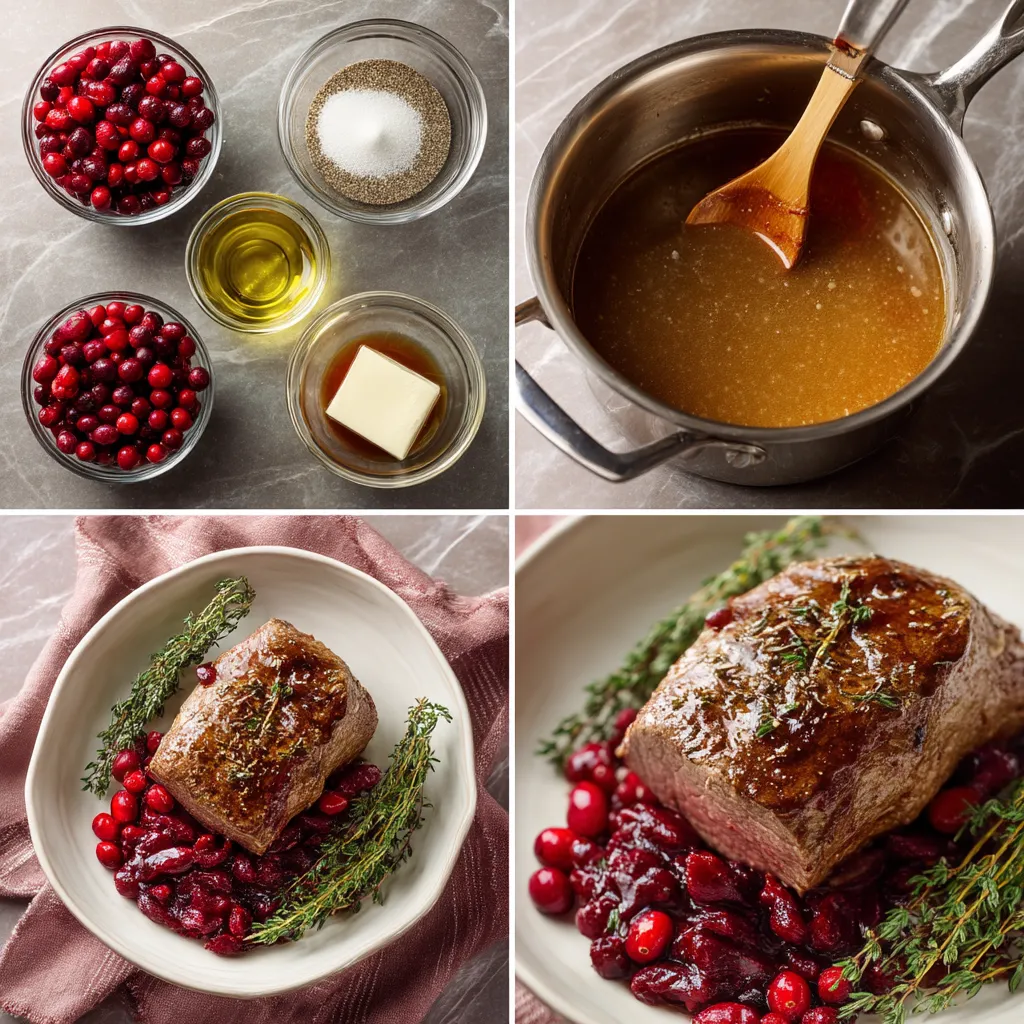
- Beef Tenderloin: The star of the show. So, what cut of meat is beef tenderloin? It’s a long, narrow muscle from the loin of the cow, prized for being exceptionally tender. You may see it labeled as Chateaubriand or know its individual steaks as filet mignon, which are cut from the tenderloin. For this recipe, you’ll want a whole, center-cut roast.
- Whole Berry Cranberry Sauce: This provides the base for our glaze, offering both sweetness and tartness, along with a beautiful texture from the whole berries.
- Balsamic Vinegar: Adds a deep, tangy complexity that cuts through the richness of the beef and balances the sweetness of the sauce.
- Dijon Mustard: Acts as an emulsifier and adds a sharp, savory depth to the glaze.
- Fresh Herbs: Rosemary and thyme are classic pairings for roasted beef and add a wonderful, festive aroma.
How to Make Cranberry Glazed Beef Tenderloin: Step-by-Step
- 1. Prep and Sear:
- The first step is crucial for flavor. After tying and seasoning the room-temperature tenderloin, sear it in a hot, oven-safe skillet. This Maillard reaction creates a deeply browned, flavorful crust that you can’t get from roasting alone.
- 2. Create the Glaze:
- While the beef sears, you’ll simmer the glaze ingredients in a saucepan. Don’t walk away! Keep an eye on it to ensure it thickens slightly but doesn’t burn. If you find your glaze is too thin, simply let it simmer a few minutes longer. If it gets too thick, a splash of water or broth will loosen it up.
- 3. Roast to Perfection:
- The seared tenderloin goes into a hot oven to cook through. We start the roasting without the glaze to prevent the sugars from burning. A meat thermometer is your best friend here; it’s the only way to guarantee your beef is cooked to your preferred doneness.
- 4. Glaze and Finish:
- During the last 10-15 minutes of cooking, you’ll brush the beautiful cranberry glaze all over the roast. This is enough time for it to caramelize and form a sticky, delicious coating without burning.
- 5. Rest the Meat:
- This is the most important step! Letting the tenderloin rest for 15-20 minutes before slicing allows the juices to redistribute, ensuring every slice is moist and tender.
Storing Your Cranberry Glazed Beef Tenderloin
Leftover Cranberry Glazed Beef Tenderloin is a wonderful treat. To store, allow the slices to cool completely to room temperature. Place them in an airtight container or wrap them tightly in plastic wrap or foil. They can be refrigerated for up to 3-4 days. For longer storage, you can freeze the slices. Place them in a single layer on a baking sheet to flash freeze, then transfer to a freezer-safe bag or container.
They will keep well in the freezer for up to 2 months. To reheat, it’s best to do so gently to avoid drying out the meat. Place slices in a skillet over low heat with a splash of broth or in a low-temperature oven until just warmed through.
Cranberry Glazed Beef Tenderloin Variations & Substitutions
This recipe is delicious as is, but it’s also quite versatile. If you’re wondering if you can use frozen cranberries instead of cranberry sauce, the answer is yes, but it requires an extra step. You’ll need to cook down about 1.5 cups of frozen cranberries with the brown sugar, balsamic, and a splash of orange juice or water until they burst and the mixture thickens before proceeding with the glaze recipe.
For a different flavor profile, you can swap the brown sugar with maple syrup for a richer sweetness. A splash of port wine or red wine in the glaze can add another layer of depth. For a bit of heat, add a pinch of red pepper flakes to the glaze. If you don’t have fresh rosemary or thyme, you can use 1/3 the amount of dried herbs.
Serving Suggestions for Cranberry Glazed Beef Tenderloin
This elegant main course pairs well with a variety of classic side dishes. For a truly festive meal, serve it alongside creamy garlic mashed potatoes or a sophisticated potato gratin to soak up the delicious juices and extra glaze. Roasted vegetables are a must; consider roasted Brussels sprouts with bacon, honey-glazed carrots, or simple roasted asparagus with a sprinkle of parmesan. A fresh green salad with a light vinaigrette can provide a nice, bright contrast to the rich meat. Don’t forget warm dinner rolls or a crusty baguette to complete the feast.

For more international dishes, explore our world cuisine category
The History of the Holiday Roast
Serving a large roast as the centerpiece of a celebratory meal is a tradition with deep roots, particularly in American and European cultures. Historically, large cuts of meat were a symbol of prosperity and abundance, reserved for special occasions like holidays, weddings, and feasts. Beef, especially prized cuts like tenderloin, became synonymous with Christmas dinner in the 19th century, popularized in works like Charles Dickens’ “A Christmas Carol.” The addition of fruit-based glazes, like our cranberry glaze, is a more modern American culinary tradition, reflecting a love for sweet and savory flavor combinations. It marries the classic celebratory roast with the tart, festive flavor of cranberries, a fruit native to North America and closely associated with holiday seasons.
This Cranberry Glazed Beef Tenderloin is more than just a recipe; it’s a centerpiece for creating memories. We hope you enjoy making and sharing this incredible dish with your loved ones during your next special celebration. Let us know how it turns out in the comments below!
Pro Tips
- Use a Meat Thermometer: For an expensive cut like tenderloin, don’t guess the doneness. It is the most reliable way to achieve a perfect medium-rare. How do you know when it’s done without one? You can try the ‘touch test,’ but it is far less accurate and risks overcooking this delicate cut.
- Don’t Skip the Sear: Searing the beef in a hot pan before roasting creates a flavorful crust and locks in juices. Use a heavy-bottomed pan like cast iron for the best results.
- Room Temperature is Key: Letting the tenderloin rest on the counter for about an hour before cooking helps it cook more evenly from edge to center.
- Glaze at the End: Apply the glaze only during the last 10-15 minutes of roasting to prevent the sugars from burning before the meat is cooked through.
What temperature should beef tenderloin be cooked to?
Can I make the cranberry glaze ahead of time?
Should I tie my beef tenderloin before roasting?
What wine pairs well with cranberry glazed beef tenderloin?
How long should I let my beef tenderloin rest after cooking?
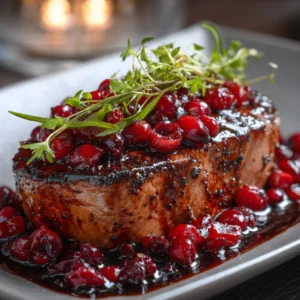
Cranberry Glazed beef Tenderloin
Ingredients
For the Beef Tenderloin
- 1 whole beef tenderloin, trimmed 3-4 lb
- 2 tbsp olive oil
- 2 tsp kosher salt
- 1 tsp freshly ground black pepper
For the Cranberry Glaze
- 1 cup whole berry cranberry sauce
- 1/4 cup balsamic vinegar
- 2 tbsp brown sugar, packed
- 1 tbsp Dijon mustard
- 2 cloves garlic, minced
- 1 tsp fresh rosemary, finely chopped
- 1/2 tsp fresh thyme, leaves only
Instructions
- Prepare the Tenderloin: Preheat your oven to 425°F (220°C). Let the beef tenderloin sit at room temperature for 30-60 minutes. Pat it dry with paper towels. Tie the tenderloin with kitchen twine at 1.5-inch intervals to create a uniform shape. Rub the entire surface with olive oil, then season generously with kosher salt and black pepper.
- Sear the Beef: Heat a large, oven-safe skillet (cast iron is ideal) over medium-high heat. Once hot, carefully place the tenderloin in the skillet. Sear for 2-3 minutes per side, until a deep golden-brown crust forms all around. This step is key for developing flavor.
- Make the Cranberry Glaze: While the beef sears, combine all glaze ingredients (cranberry sauce, balsamic vinegar, brown sugar, Dijon mustard, minced garlic, rosemary, and thyme) in a small saucepan. Bring to a simmer over medium heat, stirring occasionally. Reduce heat to low and let it gently simmer for 5-7 minutes, until it has thickened slightly. Remove from heat and set aside.
- Roast and Glaze the Tenderloin: Transfer the skillet with the seared tenderloin directly into the preheated oven. Roast for 20 minutes. After 20 minutes, brush a generous layer of the cranberry glaze over the top and sides of the tenderloin. Continue roasting for another 10-15 minutes, or until an instant-read thermometer inserted into the thickest part reads 130-135°F for medium-rare.
- Rest, Slice, and Serve: Carefully remove the tenderloin from the oven and transfer it to a cutting board. Tent it loosely with foil and let it rest for 15-20 minutes. This is a critical step for a juicy roast. After resting, remove the twine and slice the tenderloin into 1-inch thick medallions. Serve immediately with any remaining glaze spooned over the top.
Notes
- Use a Meat Thermometer: For an expensive cut like tenderloin, don’t guess the doneness. It is the most reliable way to achieve a perfect medium-rare. How do you know when it’s done without one? You can try the ‘touch test,’ but it is far less accurate and risks overcooking this delicate cut.
- Don’t Skip the Sear: Searing the beef in a hot pan before roasting creates a flavorful crust and locks in juices. Use a heavy-bottomed pan like cast iron for the best results.
- Room Temperature is Key: Letting the tenderloin rest on the counter for about an hour before cooking helps it cook more evenly from edge to center.
- Glaze at the End: Apply the glaze only during the last 10-15 minutes of roasting to prevent the sugars from burning before the meat is cooked through.