
Homemade Sourdough Bread is more than just a recipe; it’s a rewarding journey that connects you to an age-old tradition of baking. The magic begins with a simple, active sourdough starter—a living culture of wild yeasts and bacteria that gives the bread its distinct tangy flavor and incredible texture. While many wonder, “How long does it take to make sourdough bread?” the answer involves patience, as the process spans 24-36 hours, mostly passive time, from mixing to baking. Each step, from hydration to the final bake, contributes to the airy crumb and crispy, deeply flavorful crust. Embrace the process, and you’ll soon be enjoying your own artisan loaf.
Table of Contents
My first attempt at baking Homemade Sourdough Bread was filled with anticipation and a fair share of learning curves. It’s a craft that rewards attention to detail and a willingness to adapt. One of the initial questions I had was, “What is the best flour for sourdough bread?” Through trial and error, I discovered that a high-protein bread flour provides the necessary structure, while a small addition of whole wheat or rye flour can significantly enhance the flavor profile and nutritional value. This recipe is designed to guide you through these crucial choices, ensuring a delicious and satisfying outcome every time you bake.
Why You’ll Love This
- Achieve bakery-quality Sourdough Bread at home.
- Enjoy the unique tangy flavor and chewy texture.
- Impress friends and family with your artisan baking skills.
- Customizable with various flours and inclusions.
💡 Try This Next: For family favorites, try our crowd-pleasers.
What Makes Sourdough Bread Special
The unique character of Sourdough Bread stems from its reliance on a wild yeast starter rather than commercial yeast. This natural fermentation process breaks down starches and gluten, making the bread more digestible and contributing to its complex, slightly sour taste. The long fermentation also develops deep flavors and creates that desirable open, airy crumb. If you’ve ever asked, “Why is my sourdough bread dense and not airy?” it’s often due to issues with starter activity, insufficient bulk fermentation, or improper handling during shaping. Our method emphasizes gentle handling and proper proofing times to achieve a light and airy texture.

Key Ingredients for Sourdough Bread
- Active Sourdough Starter: The heart of your Sourdough Bread, ensure it’s bubbly and passes the float test (a small piece floats in water).
- Strong Bread Flour: High protein content (12-14%) is essential for developing strong gluten structure, giving your loaf chewiness and rise.
- Warm Water: Helps activate the starter and promotes initial fermentation. Temperature matters for dough consistency.
- Fine Sea Salt: Crucial for flavor, strength, and controlling fermentation. Don’t skip it!
How to Make Sourdough Bread: Step-by-Step
- 1. Mix Ingredients:
- Combine water and active starter, then add flour. Rest for autolyse.
- 2. Add Salt & Stretch and Fold:
- Incorporate salt, then perform sets of stretch and folds to build strength. This addresses the question of, “How do you feed a sourdough starter?” as maintaining a robust starter is the first step to successful baking.
- 3. Bulk Ferment:
- Allow the dough to rise significantly at room temperature. Monitor for signs of readiness, remembering that, “Can you overproof sourdough bread?” Yes, so observe carefully!
- 4. Pre-Shape:
- Gently form a loose round, letting the dough rest to relax.
- 5. Final Shape & Cold Proof:
- Create tension and place in a banneton. Refrigerate overnight for flavor development and easier handling.
- 6. Bake:
- Preheat Dutch oven, score the cold dough, and bake covered, then uncovered, for a crisp crust and golden color.
📚 Read More: For ingredient deep-dives, check out Buz Kitchen.
Storing Your Sourdough Bread
Once your Homemade Sourdough Bread has cooled completely, proper storage is key to maintaining its freshness and texture. For short-term storage (2-3 days), wrap the loaf in a clean linen towel or place it in a bread box at room temperature. Avoid airtight plastic bags, as they can trap moisture and make the crust soggy. If you plan to keep it longer, slicing the bread and freezing the slices in an airtight container or freezer bag is an excellent option. Thaw individual slices as needed, toasting them directly from frozen for a quick and delicious treat.
Sourdough Bread Variations & Substitutions
The beauty of Homemade Sourdough Bread lies in its versatility. You can easily introduce variations by incorporating different flours into your recipe. Try substituting 50-100 grams of bread flour with whole wheat, rye, or spelt flour for a deeper, nuttier flavor and denser crumb. For an enriched loaf, consider adding a tablespoon of olive oil or a small amount of honey. You can also mix in seeds like sesame, flax, or sunflower, or even dried herbs and cheese during the final stages of mixing for a savory twist. The possibilities are endless for customizing your perfect loaf.
Serving Suggestions for Sourdough Bread
Homemade Sourdough Bread is wonderfully versatile and can elevate almost any meal. It’s fantastic simply toasted with butter and jam for breakfast. For lunch, pile it high with your favorite sandwich fillings, or serve it alongside a hearty soup or fresh salad. It pairs exceptionally well with creamy cheeses, cured meats, and a drizzle of high-quality olive oil. Don’t forget to use leftover sourdough for croutons, breadcrumbs, or even a savory bread pudding. Its tangy flavor beautifully complements both sweet and savory dishes, making it a staple in any kitchen.

The History of Sourdough Bread
The story of Sourdough Bread is as old as civilization itself, tracing its origins back to ancient Egypt around 1500 BC. Before the discovery of commercial yeast, all leavened bread was essentially sourdough, relying on naturally occurring wild yeasts and bacteria. It was the primary method for bread making for thousands of years, thriving in cultures worldwide. The Gold Rush era in California even saw prospectors carrying their starters in pouches, giving them the nickname ‘sourdoughs.’ This rich history underscores the enduring appeal and timeless craft of baking Homemade Sourdough Bread.
Baking Homemade Sourdough Bread is a truly rewarding experience, connecting you to generations of bakers who have cultivated and nurtured their starters. With patience, observation, and the comprehensive steps outlined here, you’ll be creating beautiful, flavorful loaves in no time. Don’t be discouraged by initial challenges; each loaf is a learning opportunity. The satisfaction of pulling a perfectly baked, crusty Sourdough Bread from your own oven is unparalleled. Share your creations, experiment with variations, and enjoy the delicious fruits of your labor.
Pro Tips
- Use a kitchen scale for accurate measurements; sourdough is precise.
- Don’t be afraid to experiment with different flour blends for unique flavors.
- Observe your dough, not just the clock, as fermentation times vary.
- A cold proof is your friend for both flavor and ease of handling.
💡 Try This Next: For healthy meal options, visit our nutrition-focused category.
FAQs
What is the difference between active and fed sourdough starter?
How do I store leftover sourdough bread?
Why is my sourdough crust not crispy?
Can I make sourdough bread without a Dutch oven?
What temperature should sourdough bread be baked at?
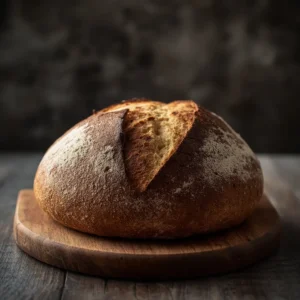
Homemade Sourdough Bread
Ingredients
For the Sourdough Bread
- 100 grams active sourdough starter fed 4-12 hours prior
- 350 grams warm water 90-95°F / 32-35°C
- 500 grams strong bread flour high protein, 12-14%
- 10 grams fine sea salt
Equipment
- Large mixing bowl
- Dough scraper
- Banneton basket or bowl lined with floured kitchen towel
- Dutch oven with lid 5-7 quart capacity
- Razor blade or lame for scoring
Instructions
- Feed Your Starter & Autolyse: In a large bowl, combine the warm water and active sourdough starter. Stir gently to combine. Add the bread flour and mix until no dry streaks remain, forming a shaggy dough. Cover the bowl and let it rest for 30-60 minutes at room temperature. This process, called autolyse, allows the flour to fully hydrate and gluten to begin developing without salt.
- Add Salt & Perform Stretch and Folds: Sprinkle the salt over the dough. Using wet hands, gently incorporate the salt by squeezing and folding the dough. Over the next 2-3 hours, perform 3-4 sets of ‘stretch and folds’ every 30-45 minutes. To do this, grab a portion of the dough, stretch it upwards, and fold it over itself. Rotate the bowl and repeat 3-4 times per set. This builds strength and elasticity in your Homemade Sourdough Bread.
- Bulk Fermentation (First Rise): After the stretch and folds, cover the bowl and allow the dough to bulk ferment at room temperature (72-78°F / 22-25°C) until it has increased in volume by about 30-50% and feels airy and bubbly. This usually takes 4-8 hours, depending on your starter’s activity and ambient temperature. This is where most of the flavor develops.
- Pre-Shape & Rest: Gently tip the dough out onto a lightly floured surface. Divide the dough if making multiple loaves. Using a dough scraper and your hands, gently form the dough into a loose round (a ‘boule’) or oval (a ‘batard’). Avoid degassing too much. Cover loosely and let it rest for 20-30 minutes. This helps the gluten relax for final shaping.
- Final Shape & Cold Proof: Lightly flour a banneton basket (or a bowl lined with a floured kitchen towel). Gently shape the dough into its final desired form, building tension on the surface. Transfer the shaped dough seam-side up into the prepared banneton. Cover tightly with plastic wrap or a shower cap and refrigerate for 12-18 hours. This cold proof slows fermentation, enhances flavor, and makes the dough easier to score.
- Preheat Oven & Dutch Oven: About an hour before baking, place your Dutch oven (with its lid) into your oven and preheat to 475°F (245°C). Ensuring the Dutch oven is fully preheated is crucial for achieving that signature crisp crust and oven spring. Patience here is key for a perfect bake.
- Score & Bake (Covered): Carefully remove the hot Dutch oven from the oven. Gently invert the cold dough from the banneton directly into the hot Dutch oven. Using a razor blade or lame, score the top of your Homemade Sourdough Bread with your desired pattern (a single deep slash or an intricate design). Cover with the lid and bake for 20 minutes.
- Bake (Uncovered) & Cool: After 20 minutes, remove the lid from the Dutch oven. Reduce the oven temperature to 450°F (230°C) and continue baking for another 25-30 minutes, or until the crust is deeply golden brown and the internal temperature reaches 200-210°F (93-99°C). Carefully remove the loaf from the Dutch oven and cool completely on a wire rack for at least 2 hours before slicing. This allows the crumb to set and moisture to redistribute, preventing a gummy texture.
Notes
- Use a kitchen scale for accurate measurements; sourdough is precise.
- Don’t be afraid to experiment with different flour blends for unique flavors.
- Observe your dough, not just the clock, as fermentation times vary.
- A cold proof is your friend for both flavor and ease of handling.